

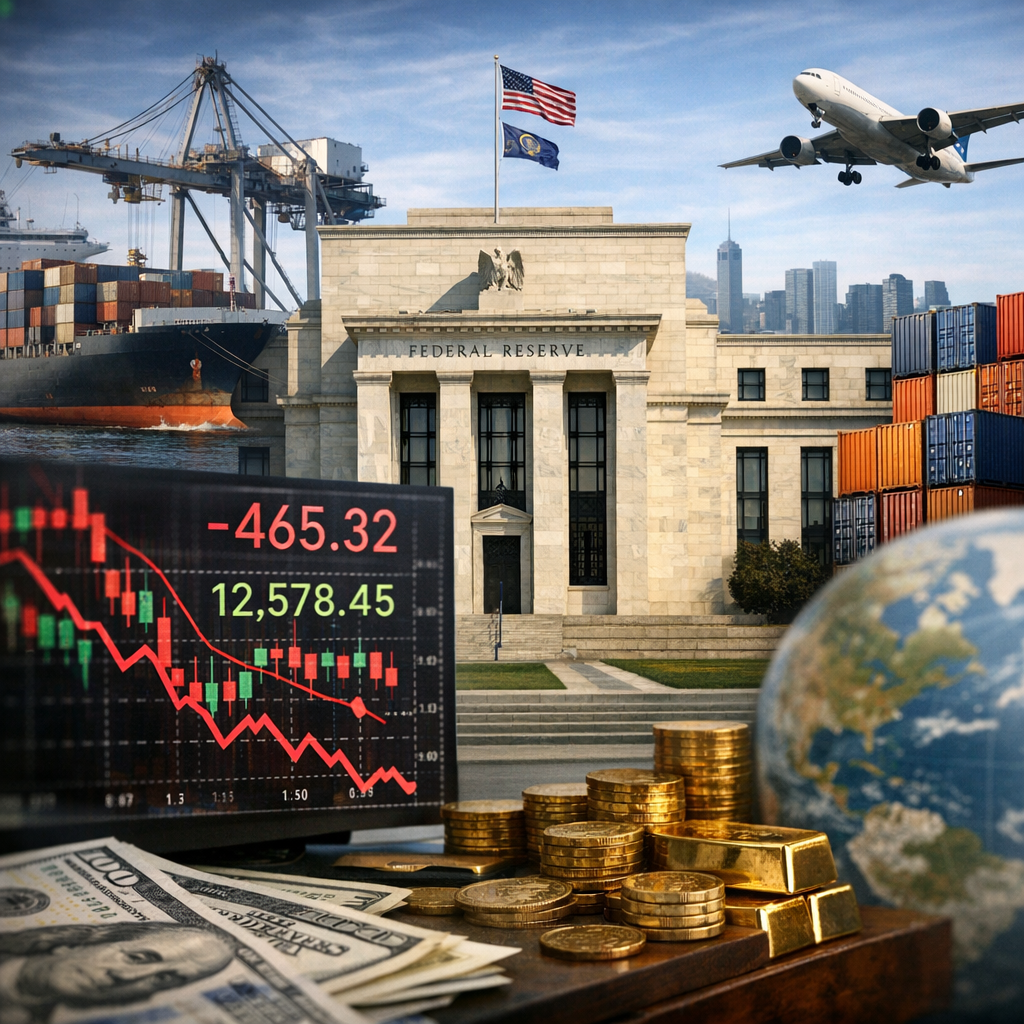
The United States economy continues to be a focal point in global discussions, especially as it navigates through a series of domestic and international challenges. Recent assessments provide a nuanced picture of its current state and future trajectory.
Economic Growth and Projections
The International Monetary Fund (IMF) has projected that the U.S. gross domestic product (GDP) will grow by 2.4% in the fourth quarter of 2026, an increase from the 2.2% growth observed in the previous year. This uptick suggests a resilient economy poised for accelerated growth. Additionally, the IMF anticipates a decrease in unemployment rates, forecasting a drop from 4.5% in late 2025 to 4.1% in 2026. Inflation is expected to align with the Federal Reserve’s 2% target by 2027.
Concerns Over National Debt
Despite these positive indicators, concerns about the escalating national debt persist. BlackRock CEO Larry Fink has highlighted the potential risks associated with the U.S. national debt, which has surpassed $38 trillion. He warns that rising debt levels could lead to increased interest costs, erode investor confidence, and potentially trigger rapid shifts in borrowing costs. Fink emphasizes the importance of sustained economic growth to improve the debt-to-GDP ratio and mitigate these risks.
Impact of Global Events
Global events, particularly conflicts in the Middle East, have also influenced the U.S. economic outlook. The IMF’s April 2026 World Economic Outlook notes that such conflicts have led to disruptions in energy markets and trade routes, contributing to a projected slowdown in global growth to 3.1% in 2026. These factors underscore the interconnectedness of global events and their potential impact on the U.S. economy.
Federal Reserve’s Stance
The Federal Reserve has maintained a cautious approach in response to these developments. While acknowledging the solid state of the U.S. economy and a strong labor market, the Fed remains vigilant about potential inflationary pressures stemming from new tariffs and global uncertainties. This balanced stance reflects the complexity of managing domestic economic growth amid external challenges.
In summary, the U.S. economy demonstrates resilience with positive growth projections and declining unemployment rates. However, challenges such as rising national debt and global geopolitical tensions necessitate careful monitoring and strategic policy responses to ensure sustained economic stability.