

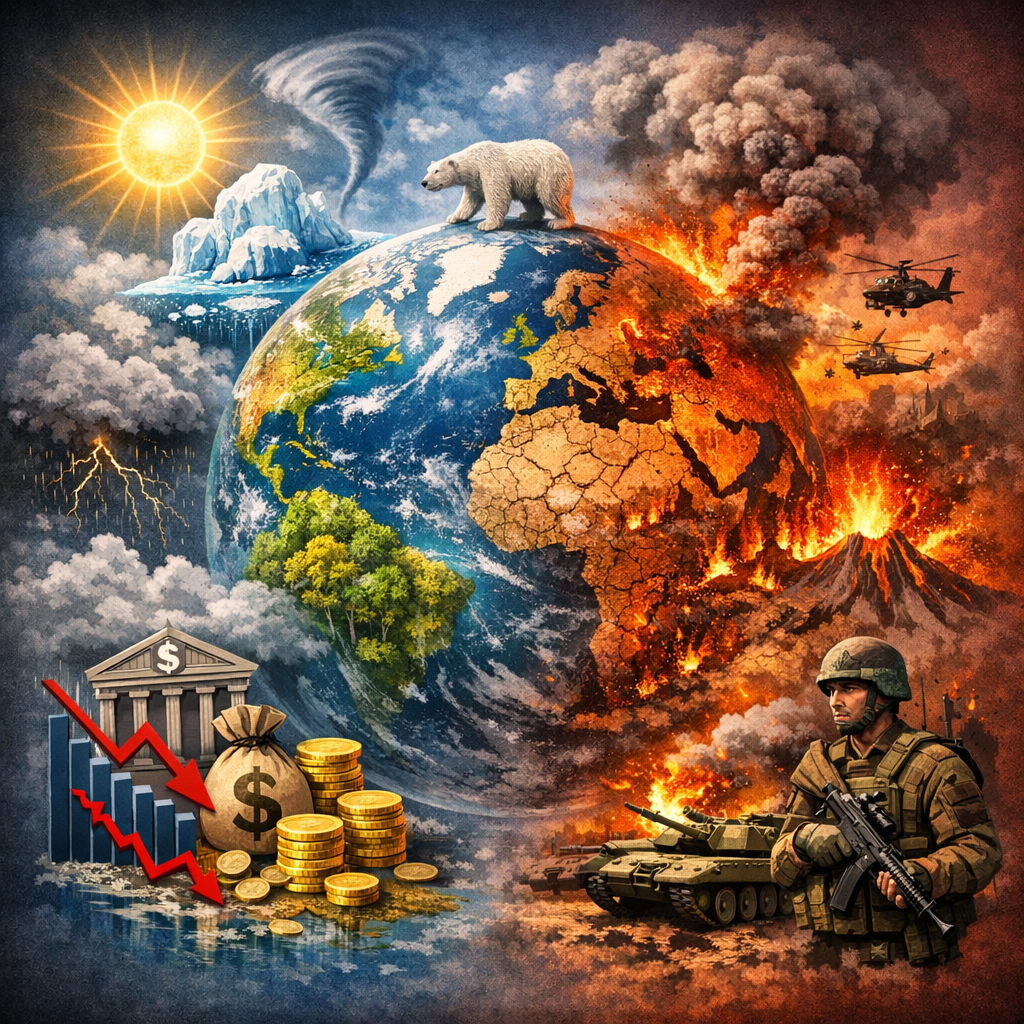
Climate Crisis Deepens as Warnings Mount
Recent reports from the United Nations show escalating climate risks. Global average temperatures have broken records, with 2024 reported as the hottest year on record, pushing us further into uncharted territory. Key indicators—sea level rise, ice sheet melt, extreme weather events—are all accelerating. Adaptation measures are being implemented, but not at the scale or speed required. Governments must ramp up climate action to avoid irreversible consequences both for people and ecosystems.
Economic Outlook Clouded by Energy Shock and Inflation
The global economy is slowing. Inflation has surged in many regions, driven in part by rising energy costs and the instability in key energy-producing zones. Growth projections have been revised downward, with many nations confronting the dual challenge of managing debt while investing in sustainable infrastructure and social services. Trade tensions and fiscal strains intensify the uncertainty facing islands, developing states, and even advanced economies.
Conflict Zones Persist—Ukraine Remains a Focal Point
Long-running wars and geopolitical unrest continue to have ripple effects beyond their borders. Ukraine’s conflict with Russia, now in its fourth calendar year, remains unresolved. Displacement, destruction, and violations of international law are ongoing, while international mediation and aid efforts strive to keep humanitarian and peace-building pathways open. The wider impact includes strained global supply chains, food insecurity, and shifting alliances.
Why These Trends Matter to Sydney and Beyond
Climate impacts—higher sea levels, heatwaves—directly affect coastal cities including Sydney. Economic uncertainty influences commodities and import prices, shaping consumer costs. And conflict-driven migration and refugee flows bring humanitarian responsibilities globally, including through Australia’s policies and international engagements. Staying informed helps communities advocate for sustainable policies and contribute to collective responses.
What We Can Do
- Support and demand stronger climate policy and adaptation funding.
- Encourage resilient, equitable economic planning that cushions shocks.
- Foster peace-building initiatives, support refugee rights, and hold leaders accountable on global conflict resolutions.