

By Isabella Patel
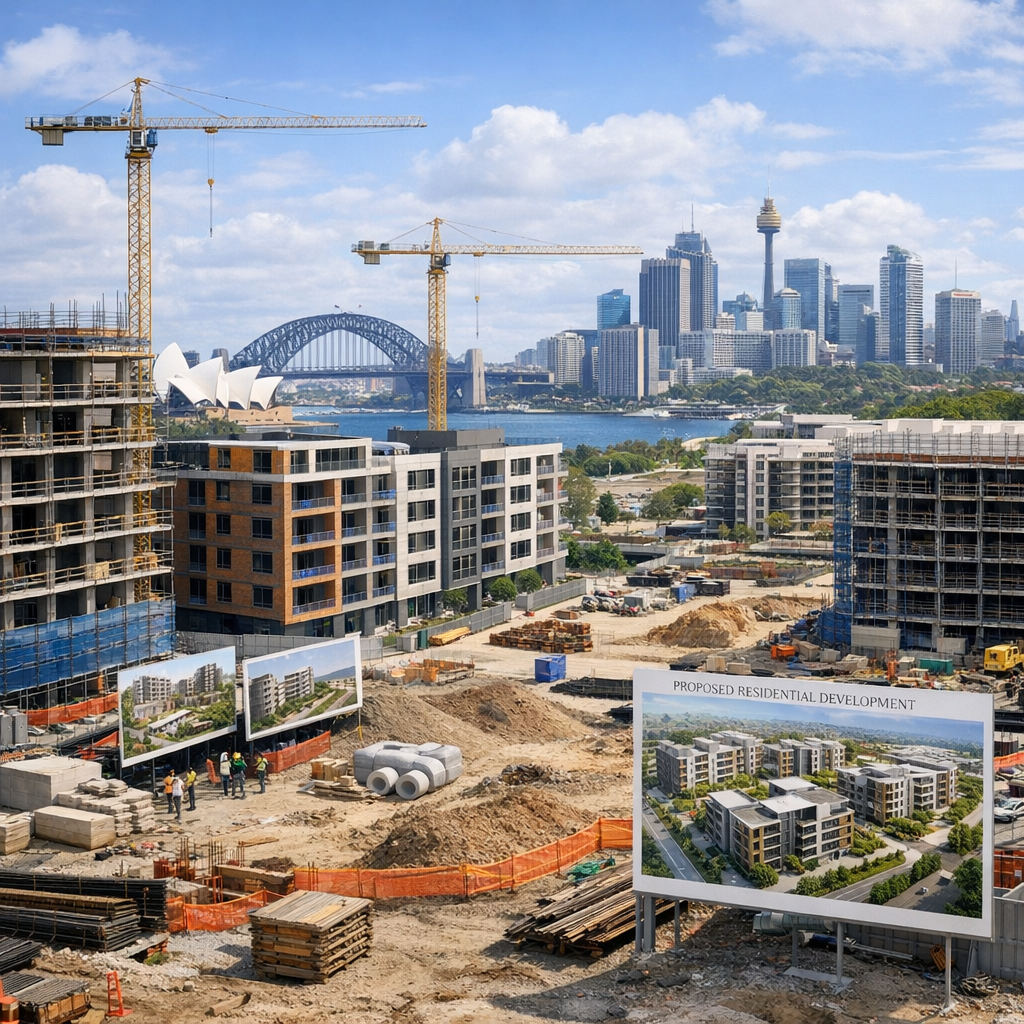
Sydney’s housing landscape is being reshaped by major state government reforms intended to tackle the city’s longstanding supply and affordability challenges. Here’s what’s changing — and what it means for neighbourhoods, residents, and the path ahead.
What’s New in Planning Law
A set of reforms under the “Sydney Plan” requires all local councils to maintain enough land zoned and planned to deliver 30 years’ worth of “feasible housing capacity”. This is a rolling requirement — meaning councils must continually update plans to ensure long-term capacity and the infrastructure needed to support it. The changes also enshrine housing targets for 2024–29 in 43 local government areas, along with infill housing incentives and density bonuses, especially near public transport and town centres. These changes came into clearer effect with the State Land Use Plan amendments and the Environmental Planning and Assessment Act reform that commenced on 10 August 2026.
Where It Matters Locally
Areas around train and metro stations, and established town centres, are likely to see more mid-rise housing under the new controls. Some outer suburbs are also affected, with policy changes such as allowing secondary dwellings (granny flats or studios) of up to 85 square metres in certain zones around Western Sydney International Airport, provided noise mitigation measures are met.
Pros and Challenges for Communities
Supporters argue the reforms will provide greater housing choice, ease price pressures, and reduce commuting burden. Allowing granny flats in areas previously restricted due to airport noise, for example, offers more flexibility for multigenerational housing or smaller households.
But the shift raises concerns too: Can infrastructure keep up? Local roads, schools, health services, and public transport will all need upgrades. And there’s angst over how these reforms may change the character of familiar streetscapes, whether local consultation will have enough weight, and whether residents will feel consulted and respected in the process.
What’s Next
Over the next two years, state and local authorities will work together to update strategic planning documents so they reflect the long-range housing requirement. The state government has also flagged further guidance around how “feasible housing capacity” will be measured and monitored.
Meanwhile, councils and communities will need to engage actively — providing feedback on proposed developments, zoning changes, and infrastructure planning — in order to ensure this new framework delivers benefits equitably across all corners of Sydney.