

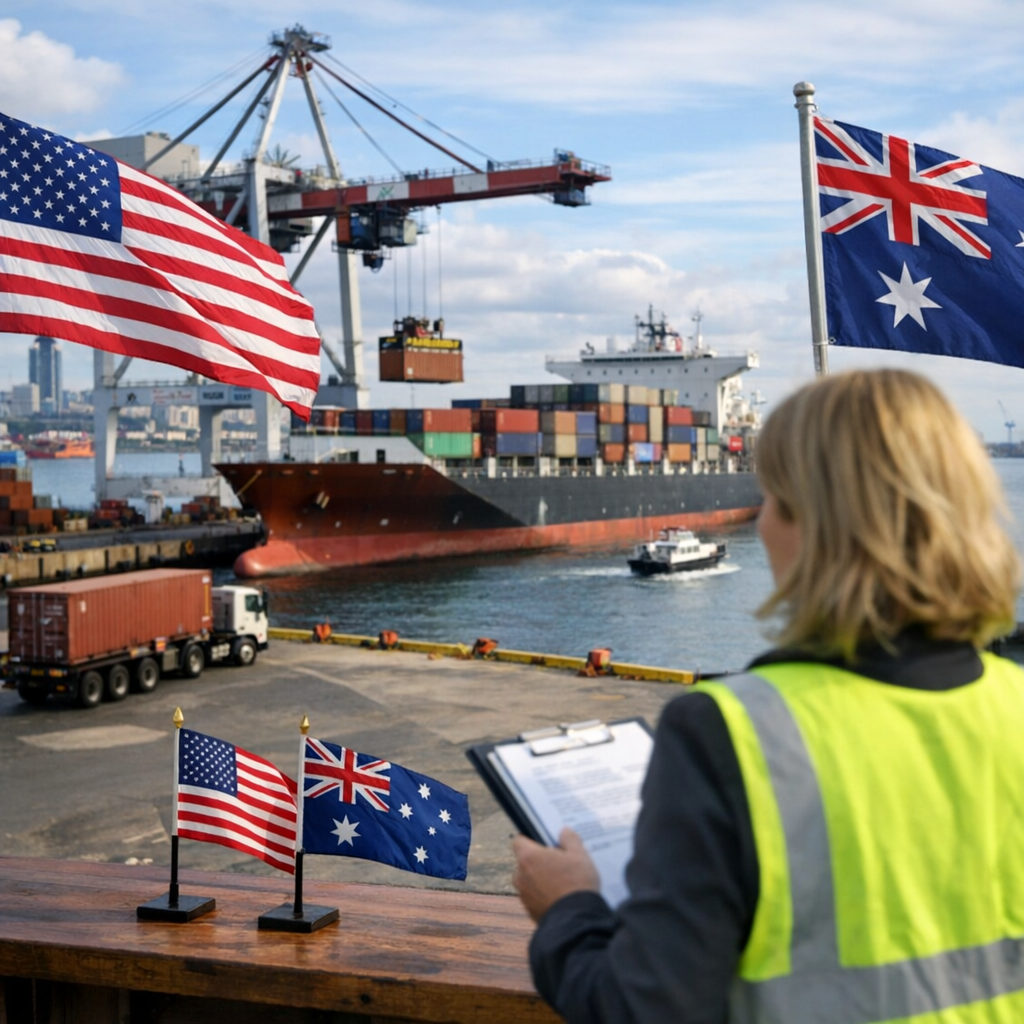
The trade relationship between the United States and Australia has long been a cornerstone of both nations’ economic strategies. This partnership, formalized through the Australia-United States Free Trade Agreement (AUSFTA) in 2005, has facilitated significant growth in bilateral trade and investment. However, recent developments necessitate a closer examination of this dynamic.
Historical Context and Growth
Since the inception of AUSFTA, the economic ties between the two countries have strengthened considerably. By 2024, the United States emerged as Australia’s second-largest trading partner, with two-way trade reaching $133.2 billion. Australian exports to the U.S. surpassed $40 billion, while imports from the U.S. exceeded $93 billion. This robust exchange underscores the mutual benefits derived from the agreement. Source
Recent Developments in Trade Policies
In 2025, the United States introduced a global 10% Temporary Import Surcharge, affecting most goods imported into the country. This policy shift has implications for Australian exporters, who now face additional costs when accessing the U.S. market. Additionally, the suspension of the de minimis exemption for low-value imports means that all goods valued at US$800 or less are subject to specific tariff rates. These changes necessitate that Australian businesses stay informed and adapt to the evolving trade landscape. Source
Investment Dynamics
The investment relationship between the two nations remains robust. The United States is the largest investor in Australia, with investment stock reaching approximately A$1.17 trillion in 2023. Conversely, Australia has substantial investments in the U.S., amounting to around A$1.20 trillion. This reciprocal investment underscores the deep economic integration and mutual confidence in each other’s markets. Source
Strategic Military Collaborations
Beyond trade and investment, the U.S.-Australia alliance is reinforced through strategic military collaborations. Exercises like Talisman Sabre, a large-scale bilateral military exercise, exemplify the commitment to regional security and interoperability. The 2025 iteration of this exercise involved over 35,000 military personnel from both nations, highlighting the depth of the defense partnership. Source
Looking Ahead
As global economic policies continue to evolve, it is imperative for Australian businesses and policymakers to remain vigilant and adaptable. Understanding the nuances of U.S. trade policies, leveraging the benefits of AUSFTA, and fostering strong diplomatic and economic ties will be crucial in navigating the future of U.S.-Australia trade relations.
For a visual perspective on this topic, you might find the following video insightful: