

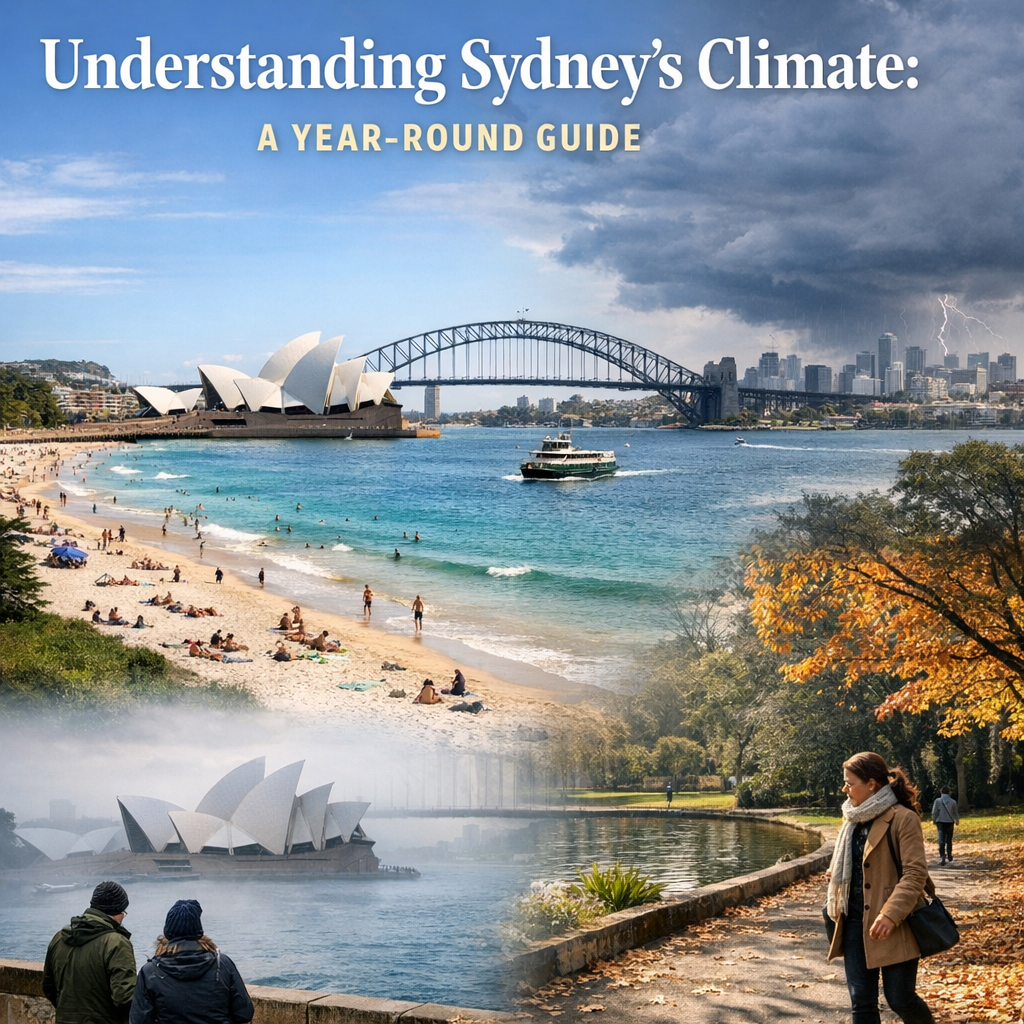
Sydney enjoys a temperate climate with distinct seasons, each offering unique experiences for residents and visitors alike. Understanding these patterns can help you make the most of what the city has to offer throughout the year.
Summer (December – February)
During summer, Sydney experiences warm temperatures ranging from 18.6°C to 25.8°C (65.5°F to 78.4°F), with average humidity around 65%. This season is ideal for beach activities, as water temperatures rise to between 21.9°C and 23.7°C (71.4°F to 74.7°F). However, it’s also the peak tourist season, so popular spots can be crowded.
Autumn (March – May)
Autumn brings milder conditions, with temperatures between 14.6°C and 22.2°C (58.3°F to 72°F). The humidity drops, making it a comfortable time for outdoor activities like coastal walks. Additionally, from May to August, humpback whales migrate north, offering excellent opportunities for whale watching.
Winter (June – August)
Winters are relatively mild, with temperatures ranging from 8.8°C to 17°C (47.8°F to 62.6°F). June typically sees the highest rainfall, averaging 132 mm (5.2 inches). Despite the cooler weather, many locals continue to enjoy outdoor activities, and the city’s cultural scene remains vibrant.
Spring (September – November)
Spring offers warmer days with temperatures between 11°C and 23°C (51.8°F to 73.4°F). The humidity is lower than in summer, providing pleasant conditions for exploring the city’s parks and gardens, which are in full bloom during this time.
Climate Considerations
While Sydney’s climate is generally favorable, it’s important to be aware of occasional extreme weather events. Heatwaves can occur during summer, and the city has experienced an increase in days with temperatures exceeding 35°C (95°F) in recent years.
By understanding Sydney’s seasonal climate patterns, you can better plan your activities and make the most of what this vibrant city has to offer year-round.